


In today’s data-driven environment, UK finance leaders are inundated with choices for business intelligence tools. The challenge is no longer finding data but selecting the right platform that transforms it into a strategic asset, delivering a clear and compelling return on investment (ROI). This framework is designed for CFOs, Finance Directors, and IT leaders to cut through the noise, evaluate solutions against critical UK-specific criteria, and implement a tool that drives efficiency, insight, and tangible financial value.
The Strategic Imperative of BI: More Than Just Dashboards
For UK finance teams, a modern BI platform is a strategic lever. It moves the function from a historical reporting centre to a forward-looking strategic partner. The core value lies in unifying disparate data from core accounting systems (like Sage, Xero, or Oracle), ERPs, and spreadsheets into a single source of truth. This integration is the foundation for automating manual reporting, which can consume 35–65% of a finance team's time, and accelerating critical processes like the month-end close by 20–40%. The outcome is not just faster reports but sharper insights that inform everything from cash flow forecasting to capital allocation, directly impacting the bottom line.
The Essential Evaluation Framework for UK Finance
Selecting a business intelligence tool is a significant business decision. Beyond feature lists, UK leaders must assess these non-negotiable factors:
-
Seamless Integration & Data Governance: The tool must connect natively to your financial ecosystem. Prioritise platforms with proven, pre-built connectors for your core systems (e.g., SAP, Microsoft Dynamics) and cloud data warehouses. Equally important is its ability to empower business users with self-service analytics while maintaining robust IT governance, security, and a clear audit trail for compliance.
-
UK Compliance & Security by Design: This is paramount. The platform must facilitate compliance with UK GDPR and the Data Protection Act 2018. Look for features like granular, role-based access controls, end-to-end encryption, and detailed audit logs. For enterprise credibility, vendor certifications like ISO/IEC 27001 are a strong indicator of rigorous security standards.
-
Total Cost of Ownership (TCO) & Scalability: Look beyond the initial license fee. A realistic TCO includes implementation, data migration, training, and ongoing support. Ensure the architecture can scale efficiently with your data volume and user base without performance degradation, protecting your investment as you grow.
-
Vendor Ecosystem & Local Support: A vendor's local presence matters. A strong UK partner network and accessible support can be the difference between a successful deployment and a stalled project. Seek vendors with proven experience in the UK financial sector.
Market Overview: Leading Business Intelligence Tools Compared
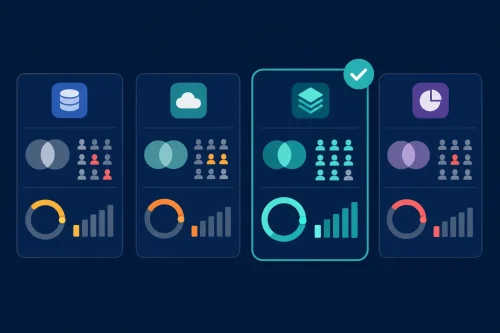
Understanding the landscape helps narrow your focus. Here’s how top platforms are perceived in the market:
Microsoft Power BI
-
Strengths: Deep Microsoft 365/Azure integration, cost-effective, strong compliance
-
Ideal for: Organisations embedded in Microsoft ecosystem
-
Starting price: £8/user/month (Pro)
Tableau (Salesforce)
-
Strengths: Best-in-class data visualisation and storytelling
-
Ideal for: Teams prioritizing advanced, communicative data visualisation
-
Starting price: $75/creator/month
Qlik Sense
-
Strengths: Unique associative model for intuitive exploration
-
Ideal for: Environments valuing user-led discovery
-
Starting price: $30/user/month
Looker (Google)
-
Strengths: Cloud-native, strong governance (LookML), embedded analytics
-
Ideal for: Technically adept teams with Google Cloud-first strategy
-
Starting price: Custom/Enterprise
A Practical 8-Step Roadmap to Implementation and ROI
A structured approach is critical to realise the promised benefits of your business intelligence tools.
-
Define Clear Objectives & KPIs: Align with business outcomes (e.g., "Reduce budget cycle time by 30%").
-
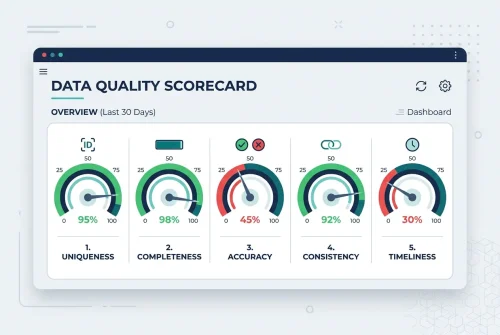
Conduct a Data Audit: Profile sources and clean data; quality in equals quality out.
-
Run a Structured Vendor Evaluation: Use UK case studies and proof-of-concept tests.
-
Plan for Security & Governance: Define data ownership, access policies, and audit rules upfront.
-
Build a Focused MVP: Launch with dashboards for 2-3 high-impact KPIs to demonstrate quick value.
-
Invest in Change Management: Train users and identify "BI champions" to drive adoption.
-
Iterate and Scale: Gather feedback and expand capabilities based on user needs.
-
Measure and Report ROI: Quantify time savings, accuracy gains, and cost reductions against your Phase 1 goals.
Conclusion: Turning Data into a Strategic Asset
For UK finance leaders, investing in the right business intelligence tool is a strategic decision that pays dividends in agility, insight, and competitive advantage. By applying a disciplined framework focused on integration, compliance, and tangible ROI, you can select a platform that not only meets today's reporting needs but also empowers your team to shape tomorrow's financial strategy.