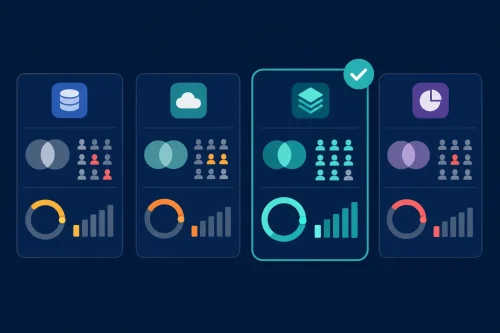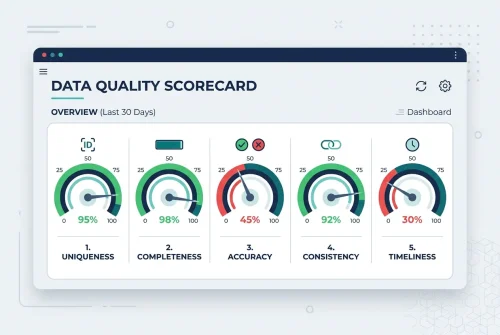



For UK finance leaders, the pressure to deliver faster, sharper insights has never been greater. But which power business intelligence platform is right? That's where things get tricky. With countless vendors, overlapping features, and uncertain ROI, it's easy to feel overwhelmed.
This guide empowers UK finance leaders and their IT counterparts with a structured approach to identify, evaluate, and implement BI tools that enhance decision-making, improve operational efficiency, and support compliance requirements.
Critical Factors When Choosing Power Business Intelligence Platforms
Comprehensive Data Connectivity
-
Support for integrating ERP, accounting, CRM, and bespoke operational systems
-
Compatibility with both cloud environments and on-premises infrastructure
-
Ability to refresh data frequently to reflect the current business states
Ease of Use and Accessibility
-
User-centric design ensuring finance professionals with varying technical skills can navigate effortlessly
-
Customisable reporting and dashboards aligned with finance metrics
-
Accessibility from mobile devices and remote locations, supporting flexible work models
Analytical Strength and Visualization Flexibility
-
Built-in capabilities for predictive analytics, trend analysis, and interactive what-if scenarios
-
Rich visual tools including advanced charts, heatmaps, and geographic mapping
-
Emerging AI features like conversational querying to democratise data access
Security and Compliance Alignment
-
Fine-grained user permissions in line with UK data protection laws
-
Robust encryption methods safeguarding data at rest and in transit
-
Audit capabilities to support compliance reporting and internal controls
Vendor Ecosystem and Support
-
Established experience in UK finance sectors with proven delivery records
-
Comprehensive training programs and ongoing technical assistance
-
Seamless integration with existing IT systems and support for future scaling
The Tangible Impact: What UK Finance Teams Achieve with Power BI
| Metric | Typical Improvement |
|---|---|
| Reporting time reduction | 35% to 65% faster |
| Accuracy of financial forecasts | 12% to 30% increase |
| Manual data entry errors | 45% to 75% decline |
| Decision-making speed | 25% to 55% improvement |
| Cost efficiencies | 20% to 40% over 3 years |
Real-world results: A UK logistics company cut its monthly financial close process by 60%, saving £100k annually. Similarly, a regional bank enhanced its cash flow forecasting accuracy by 22%, enabling better capital allocation and risk management.
Evaluating Popular Power Business Intelligence Platforms in the UK Market
Microsoft Power BI remains a top choice for UK finance teams due to its strong Microsoft 365 integration, affordability, and vibrant user community.
Other noteworthy contenders include:
-
Tableau: Offers superior visual storytelling but may require a more hands-on IT team
-
Qlik Sense: Excels in data exploration with associative indexing, but can involve a steeper learning curve
-
Looker (Google Cloud): Designed for cloud-first organisations, integrating well with modern data warehouses
Key Vendor Evaluation Points
-
Full cost analysis, including hidden expenses like training and support contracts
-
Vendor longevity and product development roadmap
-
Compatibility with your existing systems and data strategy
-
Scalability to support evolving business needs and multi-site operations
Step-by-Step Implementation Framework for Power BI Success
| Implementation Phase | Key Activities |
|---|---|
| 1. Clarify Business Goals | Define precise BI objectives aligned with finance KPIs |
| 2. Audit Data Landscape | Identify data sources, quality, and integration points |
| 3. Vendor Selection | Conduct thorough evaluations and proof-of-concept trials |
| 4. Integration Planning | Design data pipelines, security protocols, and user roles |
| 5. User Enablement | Deliver targeted training and create helpdesk support |
| 6. Phased Deployment | Begin with essential dashboards, then expand scope incrementally |
| 7. Continuous Improvement | Monitor metrics, gather feedback, and refine tools regularly |
Conclusion: From Overwhelm to Clarity
Selecting the right power business intelligence platform doesn't have to be overwhelming. By following this structured framework, UK finance leaders can cut through vendor noise, focus on what truly matters for their organisation, and deliver BI solutions that drive real business value.
Your next step: Start with Phase 1—document your top three reporting pain points and the KPIs you'd most like to improve. That clarity alone will transform your vendor conversations.