


The Data Dilemma Facing Modern Finance Teams
UK finance departments are drowning in data but starving for insights. Every transaction, bank feed, and ledger entry generates information—yet without the right tools, this raw data remains trapped in siloed systems, offering little strategic value. Finance leaders must now answer a critical question: How do we transform this flood of information into a competitive advantage?
The answer lies in adopting power business intelligence (BI) platforms designed specifically for the complexities of modern financial operations. For UK CFOs and their IT partners, selecting and implementing the right BI solution is no longer a technology upgrade—it's a strategic necessity that directly impacts reporting accuracy, forecasting reliability, and regulatory confidence.
This guide provides a fresh, practical framework for UK finance teams to evaluate, implement, and maximise power business intelligence investments that deliver measurable returns.
5 Critical Factors for Selecting Your Power Business Intelligence Platform
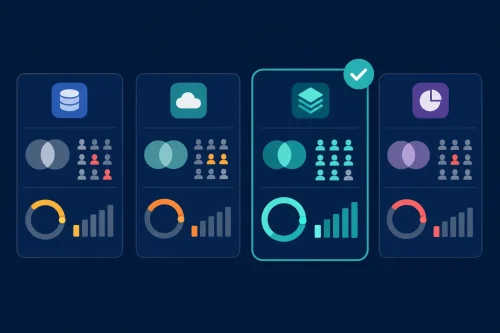
When evaluating BI vendors, UK finance and IT leaders must look beyond glossy feature lists. These five criteria will determine whether your investment succeeds or stalls.
1. Seamless Integration with Your Financial Ecosystem
-
Does the platform offer native, well-maintained connectors to your core systems (Sage, Xero, Oracle, SAP)?
-
Can it bridge on-premises databases with modern cloud data warehouses like Azure Synapse or Snowflake?
-
Does it support direct connections to UK banking platforms via secure APIs?
2. Finance-Centric Analytics Capabilities
-
Are dashboards and reporting templates designed for finance professionals, not data scientists?
-
Does the platform support essential FP&A workflows: scenario modelling, rolling forecasts, variance analysis?
-
Can users generate board-ready reports without IT assistance?
3. UK-Grade Security and Regulatory Compliance
-
Is the platform architected specifically for GDPR compliance and UK data residency requirements?
-
Does it provide granular, role-based access controls and immutable audit logs?
-
Are data encryption protocols (both at rest and in transit) transparent and verifiable?
4. True Scalability for Growing Organisations
-
Can the platform handle millions of rows of transactional data without performance degradation?
-
Does it offer cloud-based elasticity to scale during peak reporting periods (month-end, budgeting cycles)?
-
Is the pricing model predictable as data volume and user counts grow?
5. Local Vendor Ecosystem and UK Support
-
Is dedicated UK-based technical support available during local business hours?
-
Are there certified implementation partners with experience in UK finance transformations?
-
Does the vendor offer training tailored to UK accounting standards and reporting practices?
Overcoming Common Power BI Implementation Challenges
Even the most powerful BI tools can fail without careful planning. Here's how UK finance leaders can navigate the most frequent obstacles.
Challenge: Fragmented, Low-Quality Data
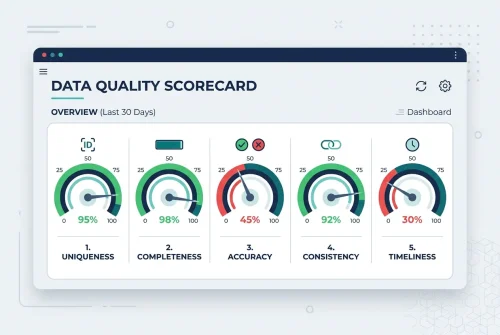
Solution: Invest in data governance before technology. Conduct a comprehensive data audit, establish clear ownership, and cleanse source systems before migration. Remember: BI outputs are only as reliable as the underlying data.
Challenge: User Resistance and Low Adoption
Solution: Involve finance users from day one. Co-design dashboards with actual end-users, deliver role-specific training, and celebrate early wins to build momentum. A technically perfect system that nobody uses delivers zero ROI.
Challenge: Navigating UK Compliance Complexity
Solution: Engage compliance officers during vendor selection, not after. Validate GDPR controls, data residency options, and audit trail capabilities before contract signing. Request evidence of FCA-aligned implementations.
Challenge: Scope Creep and Budget Overruns
Solution: Adopt an agile, phased approach. Start with a well-defined pilot focused on one high-impact area (e.g., month-end reporting). Prove value before expanding scope, and engage experienced BI consultants to keep delivery on track.
Power BI vs. Alternatives: A UK Finance Perspective
| Platform | Key Strengths for UK Finance | Considerations |
|---|---|---|
| Microsoft Power BI | Deep integration with Microsoft 365; extensive UK user base; cost-effective licensing; strong GDPR compliance tools | Steeper learning curve for advanced DAX; requires governance to avoid "report sprawl" |
| Tableau | Exceptional visualisation capabilities; strong community support; ideal for complex data storytelling | Higher total cost of ownership; may require dedicated visualisation specialists |
| Qlik Sense | Powerful associative engine; flexible data modelling; strong for ad-hoc analysis | Complex initial deployment; licensing models can be confusing |
| Looker (Google Cloud) | Cloud-native architecture; excels with large-scale data lakes; strong embedded analytics | Requires Google Cloud adoption; less established UK finance partner ecosystem |
For most UK finance departments, Microsoft Power BI offers the most pragmatic balance of capability, cost, and compliance alignment—particularly for organisations already embedded in the Microsoft ecosystem.
A Practical 8-Step Implementation Roadmap
| Phase | Focus Area | Key Actions |
|---|---|---|
| 1. Strategic Definition | Define success | Document reporting pain points; set KPIs (close time, forecast accuracy, user adoption) |
| 2. Data Audit | Assess readiness | Inventory all data sources; evaluate quality; identify gaps |
| 3. Vendor Evaluation | Select platform | Apply the 5 critical factors; conduct technical proof-of-concept |
| 4. Compliance Review | Validate controls | Perform Data Protection Impact Assessment; confirm GDPR/FCA alignment |
| 5. Pilot Development | Prove value | Build dashboards for one finance process using real data; gather user feedback |
| 6. User Enablement | Drive adoption | Deliver role-based training; establish finance "power users" as champions |
| 7. Phased Rollout | Scale carefully | Expand to additional processes; monitor performance and adoption metrics |
| 8. Continuous Improvement | Optimise | Review KPIs quarterly; incorporate new data sources; refresh dashboards |
Real-World Impact: UK Finance Teams Winning with Power Business Intelligence
Manufacturing Leader Transforms Reporting
A Midlands-based manufacturer deployed power business intelligence to connect its ERP, inventory, and sales systems. The finance team reduced month-end close from 12 days to 5, while board reporting time dropped by 70%. Leadership now accesses real-time margin data by product line—insights previously unavailable until weeks after month-end.
Financial Services Firm Masters Compliance Reporting
A London asset manager integrated Power BI with its portfolio accounting and FCA reporting systems. Regulatory report generation collapsed from five days to under six hours, while real-time compliance dashboards reduced filing risks. The compliance team now spends more time on analysis, less on data manipulation.
Retail Chain Optimises Cash Flow
A national retailer linked its EPOS, inventory, and finance platforms via BI. Cash flow forecasting accuracy improved by 28%, and stock-outs decreased by 15% through automated reorder triggers based on real-time sales data.
Conclusion: From Data Overload to Strategic Clarity
For UK finance leaders, the gap between operational reporting and strategic insight is bridged by intelligent power business intelligence. By selecting platforms that prioritise integration, usability, and UK-specific compliance, finance teams can finally escape the cycle of manual reporting and focus on what matters most: driving business performance.
Your next move: Identify one manual, high-impact reporting process—perhaps your month-end pack or board report—and map how a BI solution could automate and enhance it. That single pilot will deliver the evidence you need to scale.