
Cost Bad CRM Data Skews Your Forecast
Ask a VP of Sales how confident they are in this quarter's number, and most will give you a qualified answer. Ask why the qualification is there, and duplicate or incomplete CRM records are rarely the first thing mentioned, even though they are one of the most common reasons a forecast quietly drifts away from what actually closes.
Duplicate records do not just clutter a database. They distort the inputs a forecast is built on, and that distortion compounds every time a report gets pulled.
How Duplicate Records Inflate Pipeline Value
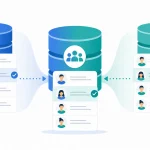
When the same deal or the same contact exists twice in a CRM, whatever pipeline value is attached to it can get counted more than once. A contact record created from a web form submission and a second record for the same person added manually by a rep after a call are the same buyer, but if the CRM treats them as two, any open opportunity tied to either record adds to the total pipeline figure independently.
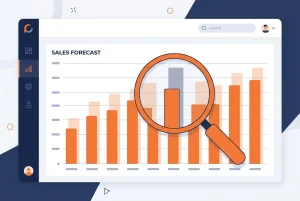
Roll that up across a sales team of any size and the inflation is not marginal. A pipeline report that looks healthy at the summary level can be carrying pipeline value that does not correspond to a real, distinct opportunity at all.
Where Cost Bad CRM Data Hits Forecasting Specifically
Gartner estimates that poor data quality costs organisations an average of $12.9 million per year ("How to Improve Your Data Quality," Gartner, 2021), and IBM puts the broader cost to the US economy at $3.1 trillion annually (IBM Big Data Hub). Forecasting is one of the specific places that cost bad CRM data shows up first, because a forecast is only as accurate as the records feeding it.
Three mechanisms drive most of the damage:
- Double-counted deal value — the same opportunity attached to duplicate contact or company records inflates total pipeline without representing additional revenue.
- Skewed win rates — if duplicate deals get closed-lost on one record while the "real" deal closes-won on the other, your win rate denominator is wrong, and every forecast built on that historical win rate inherits the error.
- Stage attribution drift — when activity and notes split across two records for the same contact, deal stage progression looks inconsistent, making stage-based forecasting models less reliable over time.
None of this shows up as an obvious error. It shows up as a forecast that is consistently a little optimistic, or a little pessimistic, without an easy way to trace why.
Why Reps and Managers Both Miss It
Reps working a deal do not usually cross-check whether the contact or company they are updating has a duplicate elsewhere in the CRM. Sales managers reviewing a pipeline report see totals, not individual record integrity. By the time a forecast miss gets investigated, the conversation focuses on deal-level execution, not on whether the underlying data was ever counted correctly in the first place.
This is also why the problem is so persistent. A pipeline review catches deals that are stalled or at risk. It does not catch deals that are duplicated, because duplication does not look like a problem, it looks like two separate, healthy opportunities.
The Forecast Confidence Gap
Revenue leaders reporting to a board or executive team need a forecast they can stand behind. When cost bad CRM data is quietly inflating pipeline or skewing win rates, the gap between the reported forecast and the actual close rate widens, and it is the RevOps or sales ops team that ends up reconciling the difference after the fact — usually manually, usually under time pressure at quarter close.
Fixing this after the forecast has already gone to leadership is damage control. Fixing the underlying data before the forecast is built is the only way to remove the distortion at the source.
How EazyMatch AI Restores Forecast Accuracy
EazyMatch AI connects to HubSpot or Pipedrive and runs multi-field AI matching across your contact and company database — checking email address, similar name within the same company, partial name match, LinkedIn URL, and mobile number for contacts, and LinkedIn company URL and website domain for companies.
This matters specifically for forecasting because the duplicates that distort a forecast are rarely exact-email matches. A contact entered once with an email address and once with only a LinkedIn URL will not be caught by native CRM deduplication, but the deal value, activity, and stage history attached to that contact are still being counted as if two separate buyers existed. EazyMatch AI's fuzzy matching approach catches that pair specifically, along with duplicate companies hiding revenue attribution across "Acme Ltd" and "Acme Limited" style variants.
Beyond deduplication, EazyMatch AI flags incomplete records and scores overall data quality, so RevOps teams can see how much of the pipeline sits on records that are missing critical fields before a forecast is finalised, not after.
Step 1: Connect your CRM
Step 2: Run checks across contacts and companies
Step 3: Review the queue of duplicates and data gaps
Step 4: Approve updates — nothing changes without your sign-off
Try EazyMatch AI free →
See how much of your current pipeline is sitting on duplicate or incomplete records. No credit card required.
FAQ
Q: How do I know if duplicate CRM data is affecting my forecast?
A: A practical first check is comparing your total pipeline contact count against your total unique company count. If the ratio looks unusually high relative to your typical deal size, or if reps regularly report finding the "same" contact twice, duplicates are likely inflating your numbers.
Q: Does this only matter for large sales teams?
A: No. Smaller teams with concentrated pipelines can see a proportionally bigger forecast swing from a handful of duplicated high-value deals, because there are fewer deals to average the error out across.
Q: Where can I see the full breakdown of what bad CRM data costs?
A: See the real cost of duplicate CRM records for the wider picture across sales, marketing, and reporting, beyond forecasting specifically.
A Forecast Is Only as Reliable as the Data Behind It
Sales forecasting will always involve judgment calls about deal timing and probability. It should not also be absorbing errors introduced by duplicate records that were never supposed to exist in the first place. Cleaning up the data before the forecast is built is a smaller job than explaining a miss after the quarter closes.
Try EazyMatch AI free →
Get a clear data quality score before your next forecast review.