
HubSpot Data Quality Software Checklist
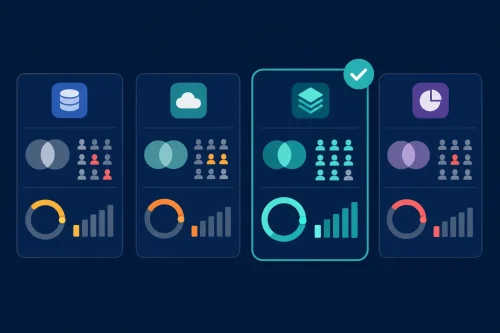
Most teams start shopping for HubSpot data quality software the same way: open three or four vendor sites, scan the feature lists, book a couple of demos, and pick whichever one covered the most boxes. The problem shows up later, once it's live and the tool turns out to be built for a different problem than the one the team actually has - a rules engine when they needed fuzzy matching, or a dedup-only app when half their issue was incomplete records.
This guide is the step before comparing named apps. If you want the reviewed shortlist of specific options, see the best HubSpot dedup tool picks for 2026; this post covers the criteria to bring to that comparison so you're evaluating against your own situation, not just a feature list.
Why HubSpot Data Quality Software Decisions Go Wrong
The usual failure mode isn't picking a bad product - it's picking a good product for the wrong problem. A team with duplicates that share no common field buys a tool built around exact-match rules and finds it can't see the duplicates they actually have. A team that just needs occasional cleanup buys an ongoing-maintenance platform and pays for far more than they use. Neither is a product failure. Both come from skipping the step of defining what "good" looks like before comparing options.
The Evaluation Criteria That Actually Matter
Before looking at any specific vendor, get clear on where your team sits on each of these:
- Matching logic - exact-match only, based on identical email or domain, or fuzzy matching across name, LinkedIn URL, phone, and company context. This is the single biggest predictor of whether the tool will actually find the duplicates costing you the most, since most real-world duplicates share no exact field.
- Scope - contacts only, or contacts plus companies and deals. A tool that only handles contacts leaves company-level duplication, like "Acme Ltd" and "Acme Limited" as separate accounts, for someone to catch manually.
- Missing-data detection - whether the software only finds duplicates, or also flags incomplete and low-quality records. Duplicates and gaps are different problems, and a tool built for one doesn't automatically cover the other.
- Standardisation - job title formatting, company name variants, and other field normalisation. Useful if inconsistent formatting is breaking your segmentation or lead scoring, less important if it isn't.
- Control - whether changes run on automated rules, or require human review before anything updates in HubSpot. Teams that have been burned by an over-eager auto-merge tend to weight this heavily; teams with well-defined rules and high trust in them weight it less.
- CRM coverage - HubSpot only, or HubSpot plus Pipedrive if you run more than one system, which matters more than it first appears if a merger or acquisition has left you managing two CRMs at once.
- Pricing model - flat fee, per-seat, or scaled to contact volume, and whether that scales sensibly as your database grows. A tool priced attractively at your current contact count can become the most expensive line item in your stack a year later if the pricing curve is steep.
Write down where your team actually stands on each line before you look at a single vendor page. It turns a features comparison into a fit comparison.
What a Good HubSpot Data Quality Software Rollout Looks Like
Once you've picked a tool against the criteria above, the first 30 days tell you whether the decision was right. Connect it to a sandbox or a non-critical segment first if that option exists, rather than pointing it at your full database on day one. Run an initial check and look closely at the first batch of flagged matches before approving anything - this is where you find out whether the matching logic actually fits your data, or whether it's surfacing false positives that would have required cleanup of their own.
Pay attention to how much manual review the tool actually requires at your database size. A review queue that's genuinely fast to work through is very different from one that technically exists but takes longer than doing the cleanup by hand. If the first month's rollout matches what the vendor described in the demo, that's a good sign the tool was chosen against the right criteria rather than the most persuasive pitch.
Questions to Ask Before You Buy HubSpot Data Quality Software
Take these into a demo rather than relying on the marketing page:
- How does matching work when two records for the same person share no common field - no shared email, no shared domain?
- What happens after a match is found: does it merge automatically, or route to a review queue first?
- Does the tool score overall data quality, or only report on duplicates?
- Can it run across more than one CRM if you use both HubSpot and Pipedrive?
- What's the realistic time to first value - a working check within a day, or a multi-week setup process?
- Does pricing scale with your contact count, and what does that look like at twice your current database size?
A vendor that can answer these directly, with specifics rather than general reassurance, is usually the one built for the problem you're describing.
Build vs Buy: When Native HubSpot Tools Are Enough
Not every team needs paid HubSpot data quality software at all. HubSpot's built-in duplicate management handles contacts and companies that share an exact or near-exact email or domain, at no extra cost, and for a small database with a straightforward duplicate problem that may cover it. The deeper comparison of where native tools stop and a paid app starts earning its place is in HubSpot native tools versus third-party apps compared. If you've worked through that and native coverage is falling short, the criteria above are what to apply next.
How EazyMatch AI Fits the Buyer's Checklist
EazyMatch AI connects to HubSpot and Pipedrive and runs multi-field AI matching - email address, name similarity within the same company, partial name match, LinkedIn URL, and mobile number for contacts, plus LinkedIn company URL and website domain for companies. Against the checklist above: matching logic is fuzzy rather than exact-match only, scope covers contacts and companies, it flags missing data and scores overall quality rather than reporting on duplicates alone, it standardises job titles, and it covers both HubSpot and Pipedrive from one account.
On control, every suggested change - a merge or an update - goes through a review queue showing which fields matched and why, before anything syncs back to HubSpot. Nothing runs automatically. That's a deliberate trade-off: teams whose main need is a large library of scripted, rules-based bulk edits should weigh that against a platform built for that specific pattern.
Step 1: Connect your HubSpot or Pipedrive account
Step 2: Run checks across contacts and companies
Step 3: Review the flagged matches, ranked by confidence
Step 4: Approve updates - nothing is automatic
Try EazyMatch AI free →
Run it against your own criteria before you commit to anything. No credit card required.
FAQ
Q: How much does HubSpot data quality software typically cost?
A: Pricing models vary by vendor - flat monthly fees, per-seat pricing, or scaling with contact volume. Check how the model behaves at double your current database size, not just today's price, and see current EazyMatch AI pricing for one reference point.
Q: How long does it take to implement HubSpot data quality software?
A: This varies by how much of the setup depends on defining custom rules versus connecting and running a check. Ask vendors directly for realistic time-to-first-value rather than relying on a generic sales timeline.
Q: Do I need HubSpot data quality software if I already use the native duplicate manager?
A: Depends on what's left after native tools run. If duplicates keep reappearing with no shared email or domain, or you want a data quality score beyond duplicate count, that's the gap paid software is built to close.
Choose Against Your Own Criteria, Not a Feature List
The teams that end up happy with their HubSpot data quality software purchase are the ones who defined matching logic, scope, control, and CRM coverage before they looked at a single vendor page. Work through the checklist above, take the questions into your demos, and only then compare named options - starting with the reviewed shortlist for 2026 if you haven't already.
Try EazyMatch AI free →
See how it measures up against your own checklist. No credit card required.